Pages

  • Twitter
  • Facebook
  • Google+
  • RSS Feed
Lynx Wallpapers
Lynx Wallpapers

Lynx Wallpapers
Lynx Wallpapers


                                     Lynx
The lynx is a solitary cat that haunts the remote northern forests of North America, Europe, and Asia. Lynx are covered with beautiful thick fur that keeps them warm during frigid winters. Their large paws are also furry and hit the ground with a spreading toe motion that makes them function as natural snowshoes.

These stealthy cats avoid humans and hunt at night, so they are rarely seen.

There are several species of lynx. Few survive in Europe but those that do, like their Asian relatives, are typically larger than their North American counterpart, the Canada lynx.

All lynx are skilled hunters that make use of great hearing (the tufts on their ears are a hearing aid) and eyesight so strong that a lynx can spot a mouse 250 feet (75 meters) away.

Canada lynx eat mice, squirrels, and birds, but prefer the snowshoe hare. The lynx are so dependent on this prey that their populations fluctuate with a periodic plunge in snowshoe hare numbers that occurs about every ten years. Bigger Eurasian lynx hunt deer and other larger prey in addition to small animals.

Lynx mate in early spring or late winter. About two months later, females give birth to a litter of one to four young.

Humans sometimes hunt lynx for their beautiful fur. One endangered population, the Iberian lynx, struggles to survive in the mountains of Spain, far from the cold northern forests where most lynx live.

There are noted differences from its relatives, the Eurasian Lynx: it is much smaller and its coat is more heavily marked with darker spots.


Its diet primarily consists of rabbits and hare, but will hunt deer, ducks, and fish. It can reach up to 54 pounds, head and body up to three feet, seven inches, tail up to five inches. The female will give birth to two to three young after a nine week gestation period.

Polecats Wallpapers
Polecats Wallpapers

Polecats Wallpapers
Polecats Wallpapers


                                                 Polecats 


Distribution: mainly in Wales but spreading. Widespread throughout the rest of Europe, as far north as southern Sweden & southern Finland.

Habitat: variety of habitats but most often found in woodlands & hedgerows.

Size: male:- head & body 38cm; tail 14cm. Female is smaller.

Description: long, almost cylindrical body with short legs & tail. Dark brown fur with yellowish under-fur showing through; black underparts, legs & tail; white patches on face giving a distinct dark, mask-like pattern.

Weight: male up to 1.5kg. Female a little over half this.

Life-span: up to five years or more.

Food: mainly rodents, also rabbits, frogs, fish, worms and birds.

The polecat used to be called a 'foul mart' because of its strong smell. The name polecat is said to be from the French poule chat,'the chicken cat' and it will kill chickens given the chance! Ferrets are creamy-white, domesticated polecats used to catch rabbits, and some escape or are lost. Many of these ferrets have reverted to polecat colouring over the generations and are known as polecat-ferrets, though they usually have a paler forehead and no mask. They also interbreed with true polecats so polecats vary in colour depending on how much ferret and how much true polecat is in their ancestry. Polecat-ferrets are found throughout Britain.

Home and hunting

The polecat is usually solitary and is mainly active by night, but may sometimes be seen hunting during the day. It moves quickly with its body almost touching the ground, long neck stretched out and short legs moving in a kind of paddling action - it glides rather than runs! Territories are marked with a very strong foul-smelling scent produced by pea-sized glands at the base of the tail. The polecat will live in almost every kind of habitat, even sand dunes and sea cliffs, although it prefers woods and copses. It makes a den in any suitable hole, such as a rabbit burrow, fox earth or natural rock crevice. Sometimes a wood stack is used. In winter, shelter may be sought in a deserted building.

Polecats are less agile than pine martens, and cannot climb as well as they do. They have a keen sense of smell with which to track down prey. Polecats catch mice, rats, voles, rabbits, birds and their eggs, frogs, lizards and snakes. They are said to kill adders and to be immune to their poison. They carry small prey by grasping it in the middle of the back.

Breeding

Mating takes place between March and May, and after a gestation period (time between mating and birth) of six weeks, a litter of 3 - 8 young is born. The babies, covered with white, silky fur, are born into a nest of dry grass in woods or among rocks. The young leave the nest when two months old and the colours and markings of the adult appear at about three months. Baby polecats huddle together in the nest to keep warm, but in hot weather lie as far apart as possible. Family groups may be seen together in late summer, but by the winter the young polecats have gone their separate ways.


Polecats and humans

The polecat was once a very common mammal throughout Britain, even found in the outskirts of London, at the beginning of the nineteenth century. However, by the end of the nineteenth century, persecution by gamekeepers and fur trappers had reduced it to a few isolated populations in central Wales.

The polecat was once considered as a threat to game and poultry and poultry-killing may be justified to some extent. However, gamekeepers and farmers, who trapped polecats mercilessly, rarely considered that predators like polecats probably help to keep the populations of rats and mice under control. The enormous reduction in polecat numbers might have contributed in the past to the huge increase in the populations of rats.

The polecat was also trapped for its fur, known as 'fitch', which was widely used in the early nineteenth century. Records show that a total of 400 polecat pelts were sold at the old Fur Fair in Dumfries, Scotland, in 1829, and 600 in 1831. In 1866, however, the number of furs for sale there was only six, after which they were not included in the records.

Many years ago, polecat-hunting was practised among the country squires of North Wales, Cheshire, Cumberland and Westmorland, where special packs of hounds were kept to hunt them down.
Rhinoceros HD Wallpapers

Rhinoceros HD Wallpapers


                             Rhinoceros


The rhinoceros is a large, primitive-looking mammal that in fact dates from the Miocene era millions of years ago. In recent decades rhinos have been relentlessly hunted to the point of near extinction. Since 1970 the world rhino population has declined by 90 percent, with five species remaining in the world today, all of which are endangered.

The white or square-lipped rhino is one of two rhino species in Africa. It in turn occurs as two subspecies, the southern and the northern. The southern dwindled almost to extinction in the early 20th century, but was protected on farms and reserves, enabling it to increase enough to be reintroduced. The northern white rhino has recovered in Democratic Republic of Congo from about 15 in 1984 to about 30 in the late 1990s. This population, however, has recently been severely threatened by political conflict and instability.

Physical Characteristics
The white rhino's name derives from the Dutch "weit," meaning wide, a reference to its wide, square muzzle adapted for grazing. The white rhino, which is actually gray, has a pronounced hump on the neck and a long face.

The black, or hooked-lipped, rhino, along with all other rhino species, is an odd-toed ungulate (three toes on each foot). It has a thick, hairless, gray hide. Both the black and white rhino have two horns, the longer of which sits at the front of the nose.

Habitat
Black rhinos have various habitats, but mainly areas with dense, woody vegetation. White rhinos live in savannas with water holes, mud wallows and shade trees.

Behavior
Rhinos live in home ranges that sometimes overlap with each other. Feeding grounds, water holes and wallows may be shared. The black rhino is usually solitary. The white rhino tends to be much more gregarious. Rhinos are also rather ill-tempered and have become more so in areas where they have been constantly disturbed. While their eyesight is poor, which is probably why they will sometimes charge without apparent reason, their sense of smell and hearing are very good. They have an extended "vocabulary" of growls, grunts, squeaks, snorts and bellows. When attacking, the rhino lowers its head, snorts, breaks into a gallop reaching speeds of 30 miles an hour, and gores or strikes powerful blows with its horns. Still, for all its bulk, the rhino is very agile and can quickly turn in a small space. The rhino has a symbiotic relationship with oxpeckers, also called tick birds. In Swahili the tick bird is named "askari wa kifaru," meaning "the rhino's guard." The bird eats ticks it finds on the rhino and noisily warns of danger. Although the birds also eat blood from sores on the rhino's skin and thus obstruct healing, they are still tolerated.

Diet
The black rhino is a browser, with a triangular-shaped upper lip ending in a mobile grasping point. It eats a large variety of vegetation, including leaves, buds and shoots of plants, bushes and trees. The white rhino, on the other hand, is a grazer feeding on grasses.

Caring for the Young
The closest rhino relationship is between a female and her calf, lasting from 2 to 4 years. As the older calves mature, they leave their mothers and may join other females and their young, where they are tolerated for some time before living completely on their own.

Predators
Man is the cause of the demise of the rhino. In the wild, the adult black or white rhino has no true natural predators and, despite its size and antagonistic reputation, it is extremely easy for man to kill. A creature of habitat that lives in a well-defined home range, it usually goes to water holes daily, where it is easily ambushed. The dramatic decline in rhino numbers is unfortunate in an era of increasing conservation and wildlife awareness, but efforts are underway to save the rhino from extinction


The name rhinoceros means ‘nose horn’ and is often shortened to rhino.

There are five different species of rhinoceros, three native to southern Asia and two native to Africa. They are the Black Rhinoceros, White Rhinoceros, Indian Rhinoceros, Javan Rhinoceros and Sumatran Rhinoceros.

All five species of rhinoceros can grow to weigh over 1000 kg (2200 lb).

White rhino can weigh over 3500 kg (7700 lb).

White rhinoceros are generally considered the second largest land mammal (after the elephant).

Three of the five rhinoceros species are listed as being critically endangered.

Rhinoceros have thick, protective skin.

Relative to their large body size, rhinoceros have small brains.

Rhinoceros horns are made from a protein called keratin, the same substance that fingernails and hair are made of.

Rhinoceros are often hunted by humans for their horns.

Rhinoceros are herbivores (plant eaters).

A group of rhinoceros is called a ‘herd’ or a ‘crash’.

Despite their name, White Rhinoceros are actually gray.
Mongoose HD Wallpapers

Mongoose HD Wallpapers


                               Mongoose

The mongoose is a small rodent-like mammal, the mongoose is similar in appearance to the meerkat and the weasel. Mongoose are naturally found in Asia, Africa and parts of Europe but the mongoose has also been artificially introduced to the Caribbean in more recent times.

The mongoose is an omnivore, meaning that mongoose eat both plants and animals. The mongoose in Africa has caught the attention of humans, as they appear to be almost immune the poison of a snake.

The mongoose is slightly lighter than the weasel, meaning that the mongoose is able to avert danger more readily than a weasel as a mongoose is able to see oncoming predators with greater ease.

There are thought to be around 30 different species of mongoose, some of which will only fend for themselves while other species of mongoose work together as a team. The different species of mongoose also vary in size ranging from less than 1 foot to nearly three foot in height.

Many species of mongoose have adapted to their particular habitat as some species of mongoose are found to live in the tops of trees where other species of mongoose have adapted to living partially in the water. A number of mongoose species are also known to have patterned fur or ringed tails, this however is not the case with every species of mongoose.

The typical mongoose has a long-shaped face and body, short legs and little round ears. Many mongoose individuals are found living in burrows which the mongoose tend to dig themselves, the mongoose however, will not pass up the opportunity to hide in an abandoned burrow of another small animal.

The female mongoose tends to produce only one litter of pups a year, but she is able to produce another litter if for some reason, the first litter is lost. The young mongooses are weaned at around 6 weeks old, and the baby mongooses then begin to forage with their mother until they are 4 months old. The male mongoose babies will leave their mother when they are around 6 months old, while the female mongoose babies will stay longer, sometimes even permanently.

Mosgoose Description 

The body of the Mongoose is roundish and a dark brown color. They have lighter brown around the face. They feature a small nose and very small ears. They have a bushy tail and very small paws with sharp claws on them. The coat is brindles and it is very thick.

Mosgoose Distribution

Africa is the location where you will find the largest number of Mongoose living. They are also found living in Asia, Europe and Hawaii. They create burrows under the ground where they live. They can create elaborate tunnels under the ground. Each of them will have several entrances and exits that enables the Mongoose to escape from danger. They will also take over burrows that other animals have abandoned.

Mosgoose Behavior

Sometimes you will see the Mongoose living alone. Others though live in groups and seem to enjoy that socialization that it offers. When they live in groups they create a hierarchy with a dominant male and dominant female. The advantage to living in a group is protection.
The Mongoose will take turns watching out for predators and other problems. If there is any problem they will give out loud calls and whistles. This allows all of the group to immediate get underground until the danger has passed. The guard duty rotates every 45 minutes to 1 hour. They often stand up on their hind legs and use their tail for balance. This allows them to look all around and to be alert to problems in their environment.

Mosgoose Feeding

When a Mongoose lives alone it has to get all of its own food. When it is part of a group though they will share what they find and spread it around for all to feed from. They feed on small mammals including various invertebrates. They also eat small types of birds. Insects, crabs, rodents, lizards, and snakes are all items that they eat. It depends on their location and their opportunities.
It is believed that the Mongoose isn’t affected though by venom that various prey including snakes offer. This means they can dine on food resources that would be classified as too dangerous for other types of animals to feed upon.

Mosgoose Reproduction

Mating can occur during any time of the year as long as the Mongoose has enough food and habitat. Giggling is used for a pair to find each other and they will court and then mate. It is common for pairs to mate with each other year after year.
The female will carry the young in her body for several weeks. When they emerge they will be born in burrow. They are blind and helpless for about 10 days. She will keep them warm, safe, and feed them milk from her body. They will come out of the burrow when they are several weeks old.
Many of the females will work together to care for the needs of the young. They create a very similar structure to a human nursery or daycare setting. The young will learn a great deal from the older juveniles. This includes digging, finding food, and being on the alert to danger. They are very playful and the young often create strong bonds with their mothers. They will stay close even after they are mature.


Hippopotamus HD Wallpapers
Hippopotamus HD Wallpapers 

Hippopotamus HD Wallpapers
Hippopotamus HD Wallpapers 


                           Hippopotamus


Hippopotamus Classification and Evolution
The Hippopotamus is a large semi-aquatic mammal that is found wallowing in the rivers and lakes across sub-Saharan Africa. Despite it's appearance, the Hippopotamus is actually thought to be most closely related to Whales as the two are thought to have had a common ancestor that existed roughly 54 million years ago. Also known as the Common Hippopotamus, it is one of two Hippo species that are found on the African continent with the other being the solitary and forest-dwelling Pygmy Hippopotamus which is only found in western Africa and is now Critically Endangered. Although the Common Hippopotamus remains abundant and widespread throughout it's current range, numbers are reportedly declining due to both hunting and habitat loss.
Hippopotamus Anatomy and Appearance
The Hippopotamus has an enormous grey barrel-shaped body that can measure up to five meters in length and weigh more than four tonnes, and which is held up by short and stocky legs. One of the Hippopotamus's most distinctive features is their enormous jaws which contain two long canine teeth (tusks) which can grow up to 50 cm long and are used for fighting. Due to the fact that the Hippopotamus spends most of it's life resting in the water, they have a number of excellent adaptations to aid their semi-aquatic lifestyle including four webbed toes on each foot that help with swimming and walking on slippery banks, and the eyes, ears and nostrils of the Hippopotamus are situated on the top of it's head. This means that when the Hippopotamus's body is immersed in the water, they are still able to see, hear and breath whilst keeping cool in the hot sun.

Hippopotamus Distribution and Habitat
Although historically the Hippopotamus would have once been found across Europe and Asia, today they are confined to Africa south of the Sahara Desert. The Hippopotamus is always found close to water and tends to prefer areas close to grasslands, where they feed during the night. Hippos are most commonly found in the deep and slow-moving rivers and lakes in eastern and southern countries, with only a few smaller and more isolated populations still found in the west. The Hippopotamus is also a resident of the seasonal wetlands where they wade through the swampy waters by day and graze on the small islands at night. Although the Hippopotamus is still common throughout much of sub-Saharan Africa, their numbers have been declining with one reason being loss of their natural habitats mainly caused by land clearance for agriculture.

Hippopotamus Behaviour and Lifestyle
The Hippopotamus spends up to 18 hours a day in the water to keep cool but when darkness falls, they venture out onto land and follow well-trodden paths to their feeding grounds, before returning to the water in the morning. The Hippopotamus is one of the largest and most feared animals in Africa as both males and females are known to be incredibly aggressive at points. The Hippopotamus tends to live in small herds containing between 10 and 20 individuals that are comprised of females with their young. The herd is led by the dominant male who will fiercely guard his stretch of river bank from both intruders and rival males, threatening them by opening his enormous mouth to expose the half meter long tusks. If this fails, the two will fight and deadly injuries often being caused. Although the dominant male will allow other males to enter his territory providing they are well-behaved, he holds the breeding rights with the females in the herd.

Hippopotamus Reproduction and Life Cycles
After a gestation period that lasts for around eight months, the female Hippopotamus gives birth to a single calf generally during the rainy season. Although like many other activities (including mating) the Hippopotamus often gives birth in the water, it is not actually that uncommon for their young to be born on land. The female protects her calf fiercely and it rides on her back to keep it safe. Hippopotamus calves are fully weaned by the time they are 18 months old but tend to remain with their mother until they are fully grown, often not leaving her until they are 7 or 8 years old. Although young males will become more independent and find their own patch of bank to patrol, females will join a herd of other females and young but despite this seemingly sociable behaviour, they do not seem to interact socially and will even graze on their own when they leave the water at night.

Hippopotamus Diet and Prey
The Hippopotamus is a herbivorous animal meaning that despite it's enormously long and sharp teeth, they are vegetarians. Different species of grasses are the main source of food for the Hippopotamus that are found growing on plains relatively close to water. When they come onto land at night, Hippo's may travel up to 5km during the night to get to their feeding grounds which they do by following paths that are marked with dung. Oddly enough, the Hippopotamus doesn't even use it's large canines for eating at all but instead has strong lips that are used to clip the grasses and cheek teeth which then grind them up. Despite it's large size, the Hippopotamus only eats around 40kg of food a night as it uses very little energy whilst floating in the water for most of the day. In areas that are close to Human settlements, Hippos have also been known to invade crops consuming mainly rice plants and simply trampling over others.

Hippopotamus Predators and Threats
The Hippopotamus is one of the largest mammals on the African continent and although mature adults are much harder for predators to kill, they are still preyed up by a number of predators throughout the wetlands. Big cats such as Lions and other animals like Hyenas and Crocodiles are the most common predators of the Hippopotamus, particularly of the young or sick individuals. It is because of this that females are thought to congregate in herds as larger numbers are more intimidating to hungry carnivores. The Hippopotamus is also threatened by people not only from the loss of their natural habitats, but also from hunting. The Hippopotamus has been hunted by people for both it's meat and it's teeth which are made of ivory. Since the ban on trading Elephant ivory, the number of Hippos killed for their teeth has risen dramatically.

Hippopotamus Interesting Facts and Features
The Hippopotamus has an enormous head which makes up around a third of it's total body weight, with it's vast mouth being able to open up to 150 degrees and revealing it's large tusks which can weigh up to 3kg each. Due to the way that the skin of the Hippopotamus is made up, the animal cannot sweat so when it comes into contact with air the skin easily dries up. Although this is not a problem in the water, to combat this the rest of the time a pink, oily substance is secreted through glands in the skin which is not only thought to prevent sunburn but also may have anti-bacterial properties that helps to keep wounds clean and prevent infection from the dirty water. Even though the Hippopotamus looks like it would be slow on land thanks to it's short and stubby legs, they are actually able to run at quite remarkable speeds and are capable of reaching 30mph when running.

Hippopotamus Relationship with Humans
The Hippopotamus can be found in all kinds of ancient African folklore with it's name in Greek actually meaning "Water Horse". Despite this fascination with the Hippopotamus, hunting of them for their meat and tusks has wiped them out from vast areas of their once large natural range and numbers continue to fall particularly in certain areas due to habitat loss. In these areas where the Hippopotamus is often forced to raid crops in order to find food, they are seen as pests by farmers who not only fear for their livelihood, but also for their lives themselves. The Hippopotamus is known to be an aggressive animal that is considered by many to be among Africa's most dangerous mammals, as attacks on people (particularly fishermen) are not unheard of.

Hippopotamus Conservation Status and Life Today
Today, the Hippopotamus is listed by the IUCN as an animal that is Vulnerable in it's natural environment however, the Hippopotamus is still considered to be abundant throughout much of it's current natural range with the exception of populations in western Africa that are becoming more and more isolated. Although Hippopotamus populations are considered stable in a number of countries in the south and the east of the continent, they are declining in many others and are particularly threatened by continuing poaching of them for their tusks.
Gorillas HD Wallpapers
Gorillas HD Wallpapers 

Gorillas HD Wallpapers
Gorillas HD Wallpapers 


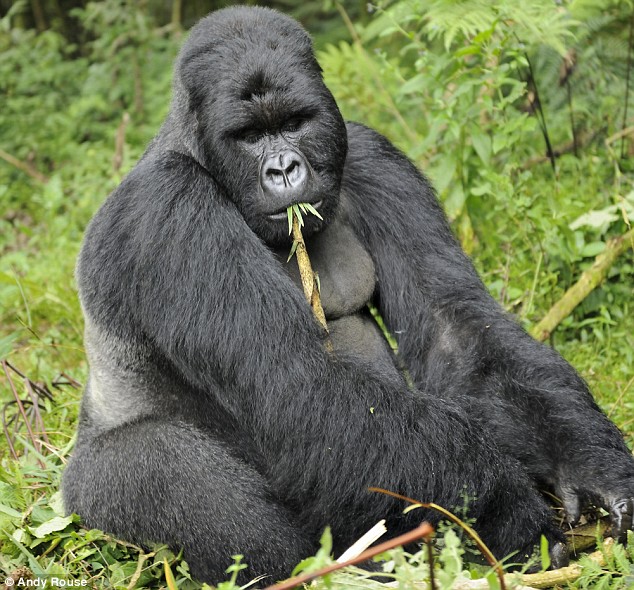
                                Gorillas


Gorillas fit into the category of primates, and they are the largest of all of primates found in the world. There are only two species of them left in the world - the Eastern gorilla and the Western gorilla. Each one has a couple of subspecies as well that helps to further break them down into smaller groups.

Many people are fascinated with gorillas due to the fact that they have so many characteristics of humans. However, that is one of the reasons why so many are upset over these animals being in captivity. They feel like they see human eyes reflecting back from the gorillas in those cages. This can be extremely unsettling and an image that is hard to let go of.

In captivity, many gorillas will do things that they see humans doing. It can be gross too such as picking their nose or throwing up. Some of them have been taught to flip the bird too which isn’t very appropriate behavior. All of this though in a zoo setting really makes you wonder who is watching how through the glass.

Gorillas are extremely large animals and they can be aggressive when they feel that they or their families are in danger. The males are much larger than the females. Yet it is amazing to see these large animals be so kind and gentle towards the females and often their own offspring. They communicate with a variety of both verbal and non verbal methods.

They live in small groups that are called troops. There is an adult male who is in charge of what goes on within that troop. The leader takes on the responsibility of fighting to protect the troop, and they will do so with their life if they have to. The other males in the troop will also fight along side the dominant male to protect their families. 

The fact that the gorilla is so smart is one reason why researchers enjoy them so much. Most of us remember the gorilla named Koko in the early 1980’s who was taught sign language. The use of these animals for research is still taking place in many areas but the degree of such research has been significantly limited from what it was a couple of decades ago.

That is mainly due to the efforts of animal protection groups who have fought hard for the humanity of the gorillas. Today many of them live in captivity in zoos around the world. They have very nice living areas that are more of a resemblance to what they have in the wild. At some of the large zoos they have acres of land where they are free to roam. Still, it just isn’t the same as being in the wild.

There are plenty of conservation efforts out there in place for the gorilla as well. This is because their numbers continue decrease at a rapid rate. The hunting of them by humans, various predators that attack the young, and the fact that their natural habitat continues to be taken away are all areas that are being covered through such conservation efforts.

There is no denying that gorillas are among the most fascinating creatures in the world. They have a rich history but what is in store for them as far as a future remains unknown and uncertain. Hopefully the right solutions will be put in place and their numbers can increase rather than continuing to drop.

In the wild gorillas can end up living for up to 50 years. Sadly, for too many of them though that lifespan is needlessly cut short. There is a great deal we understand about the lives of gorillas. However, we also need to pay more attention to their needs so that we can find ways to help them to thrive in the wild once again.

Giraffes HD Wallpapers

Giraffes HD Wallpapers


                                Giraffes

Giraffes are the tallest animals in the world. Males can grow up to 18 feet (5.5 meters) tall, females can reach 14 feet (4.3 m) tall and their babies, called calves, are born around 6 feet (1.8 m) tall. Calves can grow up to an inch a day.

Like a human fingerprint, each giraffe's coat is unique. Some subspecies have patterns that look like oak leaves, while others have square-shaped patterns that make the giraffe look like it's covered by a net. Their coat colors vary from white to light tan to nearly black, depending on what they eat and where they live. Some experts think that the patterns are for camouflage.

In the wild, giraffes will sleep only about 20 minutes a day — and usually not more than five minutes at a time — as they need to stay alert to watch for predators.

All giraffes have two hair-covered horns called ossicones. Male giraffes use their horns to playfully fight with one another. They also spar by swinging their heads at one another and entwining their necks, which is called "necking." 

Like camels, giraffes can go for a long time without drinking water because their diet — especially acacia leaves, their favorite food — contains a lot of water. When they do get thirsty, they have to bend down awkwardly to drink, which makes them easy targets for predators. To help protect themselves, giraffes usually go to watering holes together and take turns watching for predators.

Giraffes are herbivores, and they eat leaves, buds and branches from mimosa and acacia trees. Their height helps them reach food well above where other animals can reach. A giraffe may eat more than 75 pounds (34 kilograms) of food each day. Because they get just a few leaves in every bite, they spend most of their day eating.

Acacia trees have long thorns that deter most animals — but not giraffes. Their 18-inch (46-centimeter) tongues can reach around the thorns, and their thick, sticky saliva coats any thorns they might swallow. The dark blue-gray color of a giraffe's tongue helps protect it from sunburn while the giraffe is reaching for tree leaves.

Giraffes are ruminants, like cows, and their stomachs have four compartments that digest the leaves they eat. After a giraffe swallows a mouthful of leaves once, a ball of already-chewed leaves, or cud, will make its way back up the throat for more grinding.

Giraffes can breed anytime throughout the year. A male will sort of flirt with a female in heat, sometimes feeding beside her and tangling necks with her. Females give birth to a single calf about 14 months after they mate.

When a giraffe calf is born, it drops to the ground head first from about 6 feet (1.8 meters) high. The fall surprises the calf and makes it take a big breath, but doesn't really hurt it. The calf can walk after about an hour, and it can run with its mom just 10 hours after it's born. After they're a few weeks old, calves join a group of young giraffes called a crèche.

Giraffes can live up to 25 years in the wild and longer in captivity.

Where giraffes live:

Giraffes used to live throughout arid and dry-savanna zones of sub-Saharan Africa, wherever there were trees. Now their range has shrunk due to habitat loss. Most giraffes live in wooded savannas, open woodlands and riparian forests, in east Africa and the northern parts of southern Africa, where they're protected by national parks.

West African Giraffes only survive in the wild, and the only known population lives in southwestern Niger.

The only remaining wild population of Ugandan Giraffes is in Murchison Falls National Park, Uganda. They've also been re-introduced to six sites in Kenya and one other site in Uganda.

Conservation status: Least Concern to Endangered

Overall, the species is of least concern, but the subspecies listed above, the West African Giraffe and the Ugandan Giraffe, are both endangered.

Giraffes are widespread throughout Africa, and their population totals more than 100,000. Experts believe their numbers are shrinking due to habitat loss and poaching, so the species may soon be listed as threatened.

The West African Giraffe is endangered. There are currently fewer than 200 individuals in this subspecies, though experts think they're on the rise thanks to conservation programs.

The Ugandan Giraffe is also endangered. There are fewer than 2,500 individuals in this subspecies, and experts are worried that this number is shrinking.

Odd facts:

Giraffes look a little like a cross between a camel and a leopard: They have a small hump on their back and a spotted coat. People used to call the giraffe a "camel-leopard," and that's how the giraffe got its species name, camelopardalis.

A giraffe's foot is 12 inches (30 centimeters) across — about the size of a dinner plate.

A giraffe's neck is 6 feet (1.8 m) long and weighs about 600 pounds (272 kg).

A giraffe's back legs look shorter than its front legs, but they're really about the same length — 6 feet (1.8 m).

A giraffe's heart is 2 feet (0.6 meters) long and weighs about 25 pounds (11 kg).

For a long time people thought giraffes were mute, but they actually communicate by emitting moans or low notes that humans can't hear. They can also whistle, hiss, moo and roar.

Besides humans, giraffes' only predators are lions and crocodiles. Giraffes can defend themselves with a deadly kick when they need to.

Many male giraffes check whether a female's in heat by nudging her to make her pee. They can usually tell by smell, but some males will even taste the urine to see if she's ready to mate.

Giraffes have the same number of vertebrae in their necks as we do — seven. Each one can be over 10 inches (25.4 cm) long.

Giraffes run by moving their front and back legs on one side forward together. Their funny gait makes them pretty fast: The record running speed of a giraffe is 34.7 mph (56 kph).

Chimpanzee Wallpapers

Chimpanzee Wallpapers


                                         Chimpanzee


Noisy and curious, intelligent and social, the chimpanzee is the mammal most like a human. Chimpanzees fascinate humans and are favorites both in zoos and the wild.

Three subspecies of common chimpanzees are distributed across the forest zone of Africa from Guinea to western Tanzania and Uganda. Another species of chimpanzees, the bonobo (Pan paniscus), is found exclusively in central Democratic Republic of Congo. In East Africa the chimpanzee is found in the wild in Tanzania and Uganda, but only in captivity in Kenya. Gombe National Park in Tanzania is the first park in Africa specifically created for chimpanzees.

Physical Characteristics

The chimpanzee has a thickset body with long arms, short legs and no tail. Much of the body is covered with long black hair, but the face, ears, fingers and toes are bare. They have hands that can grip firmly, allowing them to pick up objects. The discovery that they used "tools" for certain purposes surprised the world.

Habitat

Chimps are mainly found in rain forests and wet savannas. While they spend equal time on land and in trees, they do most of their feeding and sleeping in trees.

Behavior

Chimps live in groups called troops, of some 30 to 80 individuals. These large groups are made up of smaller, very flexible groups of just a few animals, perhaps all females, all males or a mixed group.

Chimps sometimes chew leaves to make them absorbent and then use them as a sponge, dipping them in water and sucking out the moisture. They also use grass stems or twigs as tools, poking them into termite or ant nests and eating the insects that cling to them. They are able to wedge nuts between the roots of a tree and break the shells open with a stone.

Chimps are both arboreal and terrestrial, spending much of their daytime hours on the ground. They are quadrupedal, walking quickly on all fours with the fingers half-flexed to support the weight of the forequarters on the knuckles. They occasionally walk erect for short distances.

Chimps are agile climbers, building nests high up in trees to rest in during midday and sleep in at night. They construct new nests in minutes by bending branches, intertwining them to form a platform and lining the edges with twigs. In some areas chimps make nests on the ground.

Diet

Chimps are diurnal (but often active on moonlit nights) and begin their activities at dawn. After descending from their night nests they hungrily feed on fruits, their principal diet, and on leaves, buds and blossoms. After a while their feeding becomes more selective, and they will choose only the ripest fruit. They usually pick fruit with their hands, but they eat berries and seeds directly off the stem with their lips. Their diet consists of up to 80 different plant foods.

Caring for the Young

The female chimp has an estrus cycle of about 34 to 35 days. While in heat, the bare skin on her bottom becomes pink and swollen, and she may mate with several males. She normally gives birth to just one baby, which clings tightly to her breast and, like a human baby, develops rather slowly. An infant can sit up at 5 months and stand with support at 6 months. It is still suckled and sleeps with its mother until about 3 years of age, finally becoming independent and separating from her at about 4 years. Sexual maturity is reached between 8 and 10 years.

Chimps are among the noisiest of all wild animals and use a complicated system of sounds to communicate with each other. A loud "wraaa" call, which can be heard more than a mile away, warns of something unusual or disturbing. They hoot "hoo-hoo-hoo," scream, grunt and drum on hollow trees with the flat of their hands, sometimes for hours.

Chimps touch each other a great deal and may kiss when they meet. They also hold hands and groom each other. An adult chimp often has a special "friend" or companion with which it spends a lot of time. Female chimps give their young a great deal of attention and help each other with babysitting chores. Older chimps in the group are usually quite patient with energetic youngsters.

Predators

The number of chimps in the wild is steadily decreasing. The wilderness areas necessary to their survival are disappearing at an alarming rate as more forests are cut down for farming and other activities. As the human's closest relative the chimp is vulnerable to many of the same diseases, and their capture for medical research contributes to their decline, especially in West Africa. as more forests are cut down for farm activities. In addition, recent outbreaks of the incurable disease Ebola hemorrhagic fever, threaten to decimate important chimpanzee populations in the Republic of Congo and Gabon.

Crow Wallpapers
Crow Wallpapers

Crow Wallpapers
Crow Wallpapers


                                      Crow 

Crows are usually black in color all over, but some species are not totally black and are found with white, gray or brown coloring around the neck or the beak.
Crows are considered to be very intelligent creatures and have existed since a long time due to their ability to adapt to changing situations. They belong to the corvid family of birds and are highly adaptable to any kind of situation.
Crows are omnivorous.
There are about 45 species of crows around the world.
The Corvus Brachyrhynchos or the Common Crow measures around 20–30 cm in length and has a wingspan that is double the size. Their strong and sharp beaks help them rummage for food from almost anywhere.
Crows are migratory birds and assemble in huge groups in order to migrate during fall and winters, since they cannot stand harsh climate. A bunch of crows is called as ‘murder’!
Crow eggs hatch in about eighteen days and stay with their parents till they learn to fly.
The common crow usually lives for a period of 5-7 years.
Mating crows live together for years and some of them actually part when one of them dies.
Baby crows learn to fly when they are about one month old.
Crows are attracted to food scraps and trash from garbage cans.
They are not restricted to a particular habitat and can easily breed and survive in a variety of habitats, which includes mountains, woodlands, plains, farms & fields as well as modern urban areas.
Corvids are absolutely fearless and commonly attack golden or bald eagles.
Crows get emotional very easily and usually vocalize their feelings.
The average number of eggs laid by the female is 4–7. Both male and female take turns to guard the nest and the male takes the initiative to incubate them. Crows usually have a single mate for life unless one dies or is captured.
They are known to be both beneficial as well as a nuisance for farmers. Though they eat up a number of pests that may destroy crops like cutworms, wireworms, grasshoppers, etc. they are also known to destroy a large number of crops by pecking on them, their favorite being corn!
Crows have a varied and evolved language and usually adapt to the sounds of the surroundings they live in.
Crows prefer to nest in coniferous trees.
Crows love to dive-bomb other birds and their young. 
Some crows, like the Raven, can be taught to speak the basic human language.
Kiwi  Wallpapers
Kiwi  Wallpapers

Kiwi  Wallpapers
Kiwi  Wallpapers


                                       Kiwi 


The kiwi is the smallest living member of the ratite family, a group of flightless birds which includes rheas, ostriches, emu and the extinct NZ moa. It lives in burrows in the ground and is largely nocturnal. 

It is the only known bird to have external nostrils at the end of its bill and one of the few to have a highly developed sense of smell. A kiwi literally sniffs out its food. 

Kiwis are unique in that they have no tail, and stubby, two inch wings that are usually covered by their coarse, bristly, hair-like feathers. These wings are pretty much useless. .

Thanks to New Zealand's ancient isolation and lack of mammals, the kiwi evolved to occupy a habitat and lifestyle that elsewhere in the world is occupied by a mammal. 

It means that in many ways the kiwi is a very unbird-like bird. Its skin is tough as shoe-leather, its feathers are like hair, its bones are heavy, its wings end in a cat-like claw and its body temperature is 38° Celcius, lower than most other birds. 

Because they are so aggressive, Department of Conservation staff can attract them simply by imitating their call. Incensed that another kiwi is on their turf, the response can be instant and dramatic. John McLennan (Landcare Research) describes what happens when he imitates the call:

"It's amazing to hear them coming to kick the intruder out. They sound like a deer charging, almost exploding, through the dark. Standing there, it's quite intimidating - even for us. I guess it's part of the threat display."  

"Pete", a Great Spotted Kiwi in North Westland, is the most aggressive McLennan has crossed paths with. "We've just got to walk into his territory and he comes catapulting in for a hit-and-run. He belts you in the leg and then runs off into the undergrowth. I think he views us as super-big kiwi. He's probably given some trampers a hell-of-a-scare.

Bees HD Wallpapers
Bees HD Wallpapers

Bees HD Wallpapers
Bees HD Wallpapers


                                      Bees


There are about 20,000 different species of bees in the world. Bees live in colonies and there are three types of bees in each colony. There is the queen bee, the worker bee and the drone. The worker bee and the queen bee are both female, but only the queen bee can reproduce. All drones are male. Worker bees clean the hive, collecting pollen and nectar to feed the colony and they take care of the offspring. The drone’s only job is to mate with the queen. The queen’s only job is to lay eggs. 

Bees store their venom in a sac attached to their stinger and only female bees sting. That is because the stinger, called an ovipositor, is part of the female bee’s reproductive design. A queen bee uses her ovipositor to lay eggs as well as sting. Sterile females, also called worker bees, don’t lay eggs. They just use their ovipositors to sting. 

Bees see all colors except the color red. That and their sense of smell help them find the flowers they need to collect pollen. Not only is pollen a food source for bees, but some of the pollen is dropped in flight, resulting in cross pollination. The relationship between the plant and the insect is called symbiosis.

Certain species of bees die after stinging because their stingers, which are attached to their abdomen, have little barbs or hooks on them. When this type of bee tries to fly away after stinging something, part of the abdomen is ripped away.

Bees are the only insect in the world that make food that people can eat

Honey contains all of the substances needed to sustain life, including enzymes, water, minerals and vitamins

Eating honey can help you smarter! It is the only food to contain ‘pinocembrin’ that is an antioxidant that improves brain function

One bee will only make 1/12 of a teaspoon on honey in its entire life

Many plants rely on insects like bees in order to be pollinated; which is why they provide nectar to say thanks

A colony of bees can contain between 20,000 and 60,000 bees, but only one queen bee

A bee’s wings beat 190 times a second, that’s 11,400 times a minute!

Worker bees, who are all female, are the only ones who will attack you, and only if they feel threatened

It has been estimated that it would take 1,100 bee stings to produce enough venom to be fatal

Each colony smells different to bees, this is so they can tell where they live!

It would take 1,100 bees to make 1kg of honey and they would have to visit 4 million flowers

There are 900 cells in a bee’s brain

The queen bee will lay around 1,500 eggs a day

Bees have two separate stomachs; one for food and another just for nectar

Honey has natural preservatives so that it won’t go bad

A third of all the plants we eat have been pollinated by bees

Bees have been around for more than 30 million years

Bees communicate by smells called ‘pheromones’ and by performing special ‘dances’

Bee keepers only take the honey that the bees do not need, but this can be as much as 45kg from one hive!

There are lots of different types of honey which taste different depending on the flowers used to make it
Shark Wallpapers
Shark Wallpapers

Shark Wallpapers
Shark Wallpapers


                                   Sharks 

The legendary great white shark is far more fearsome in our imaginations than in reality. As scientific research on these elusive predators increases, their image as mindless killing machines is beginning to fade.

Of the 100-plus annual shark attacks worldwide, fully one-third to one-half are attributable to great whites. However, most of these are not fatal, and new research finds that great whites, who are naturally curious, are "sample biting" then releasing their victims rather than preying on humans. It's not a terribly comforting distinction, but it does indicate that humans are not actually on the great white's menu.

Great whites are the largest predatory fish on Earth. They grow to an average of 15 feet (4.6 meters) in length, though specimens exceeding 20 feet (6 meters) and weighing up to 5,000 pounds (2,268 kilograms) have been recorded.

They have slate-gray upper bodies to blend in with the rocky coastal sea floor, but get their name from their universally white underbellies. They are streamlined, torpedo-shaped swimmers with powerful tails that can propel them through the water at speeds of up to 15 miles (24 kilometers) per hour. They can even leave the water completely, breaching like whales when attacking prey from underneath.

Highly adapted predators, their mouths are lined with up to 300 serrated, triangular teeth arranged in several rows, and they have an exceptional sense of smell to detect prey. They even have organs that can sense the tiny electromagnetic fields generated by animals. Their main prey items include sea lions, seals, small toothed whales, and even sea turtles, and carrion.

Found in cool, coastal waters throughout the world, there is no reliable data on the great white's population. However, scientists agree that their number are decreasing precipitously due to overfishing and accidental catching in gill nets, among other factors, and they are listed as an endangered species.

A shark does not have one bone in its body.  Its skeleton is made up of cartilage.  Cartilage is a tough material, like the material that shapes your ear.  

  The Swell Shark, found in New Zealand, barks like a dog.  

  Weird things have been found inside a shark, such as a nail, a bottle of wine, a treasure chest, coats, a suit of armor, a drum and a torpedo.  

  A shark’s skin is covered with denticles, which are small, razor-sharp teeth.  Denticles can be removed from a shark’s body.  After the small teeth are removed, the remaining skin can be made into very strong leather.  A pair of shoes made from shark leather can last up to four times longer than shoes made with cowhide.  

 Sharks have very good senses.  Sometimes a shark is called “a swimming nose”, for its great sense of smell.  Sharks can easily detect prey that is in the sand, as well as at night.  A shark also has a remarkable sensitivity to vibrations in the water.  It can feel the movements made by other animals that are hundreds of feet away.  They can hear sounds from thousands of feet away. Sharks can tell the direction from where the sound is coming from, too. 

  Sharks cannot eat Puffer Fish, because the Puffer Fish inflates like a balloon and pokes the shark’s mouth with its sharp needles. 

  Most sharks give birth to their babies.  Only a few sharks lay eggs.  Most sharks have six to twelve babies at a time, but the Hammerhead and Tiger Shark can have as many as 40 babies at a time.  

  Most species of sharks can swim up to 20-40 miles per hour.  A Mako Shark has been recorded at more than 60 miles per hour. 

  A shark has three types of fins.  They have two dorsal fins on their back, one fin beneath their body, called the pectoral fin (not all species have it), and the caudal fin is the tail. 

  The Whale Shark is the biggest fish in the world.  

 A Whale Shark has more than 4,000 teeth, but each is less than 1/8 inch long.  A shark may go through 1,000 sets of teeth during its lifetime.  When a shark loses a tooth, one replaces it.

 A Whale Shark weighs about 90,000 pounds.  The second largest shark is the Basking Shark.  It can be as much as 40 feet long.

  Question:  What is more dangerous to people - a shark or a wasp/bee?  Answer: wasp/bee  Every year, 100 people die from wasp or bee stings, yet hundreds of millions of people go swimming, and sharks kill only about six people.  Only about 25 sharks have been known to actually attack people.  Every year, people kill thousands of sharks.  They are killed for food, oil, skins and sport.

 
Ostrich Wallpapers
Ostrich Wallpapers

Ostrich Wallpapers
Ostrich Wallpapers


                                  Ostrich


The flightless ostrich is the world's largest bird. They roam African savanna and desert lands and get most of their water from the plants they eat.

Though they cannot fly, ostriches are fleet, strong runners. They can sprint up to 43 miles (70 kilometers) an hour and run over distance at 31 miles (50 kilometers) an hour. They may use their wings as "rudders" to help them change direction while running. An ostrich's powerful, long legs can cover 10 to 16 feet (3 to 5 meters) in a single stride. These legs can also be formidable weapons. Ostrich kicks can kill a human or a potential predator like a lion. Each two-toed foot has a long, sharp claw.

Ostriches live in small herds that typically contain less than a dozen birds. Alpha males maintain these herds, and mate with the group's dominant hen. The male sometimes mates with others in the group, and wandering males may also mate with lesser hens. All of the group's hens place their eggs in the dominant hen's nest—though her own are given the prominent center place. The dominant hen and male take turns incubating the giant eggs, each one of which weighs as much as two dozen chicken eggs.

Contrary to popular belief, ostriches do not bury their heads in the sand. The old saw probably originates with one of the bird's defensive behaviors. At the approach of trouble, ostriches will lie low and press their long necks to the ground in an attempt to become less visible. Their plumage blends well with sandy soil and, from a distance, gives the appearance that they have buried their heads in the sand.

Ostriches typically eat plants, roots, and seeds but will also eat insects, lizards, or other creatures available in their sometimes harsh habitat.

Scientific name: Struthio Camelu

Ostriches live in the wild in Africa

In ancient Egypt ostriches were sometimes used to pull chariots but they were mean

Ostriches never need to drink water because they produce it internally and they also get it from their food

There are over 2 million ostriches in the world

Ostriches have been on earth between 70-120 million years

Ostriches has really good immune systems

An ostrich’s eye is bigger then it’s brain

Ostriches are the largest bird in the whole world

It is also the tallest and heaviest bird in the world

An Ostrich can grow up to 9 ft all

It can weigh up to 350 pounds

Ostriches can not fly instead they run

An ostrich can run at speeds of 40 miles per hour

A male ostrich is called a rooster

A female ostrich is called a hen

An ostrich only has two toes and one claw on each foot

Ostriches eat roots, leaves, insects, flowers, grass and fruit

They live between 50-75 years

An ostrich has the largest egg it can be 6 inches long and weigh 3 pounds

An ostrich only kicks forward

They kick so hard that they can kill a predator by kicking them

People can eat ostrich meat and eggs
Dolphin Wallpapers
Dolphin Wallpapers

Dolphin Wallpapers
Dolphin Wallpapers


                                                                                                   Dolphins


Dolphins are very intelligent and they seem to be well loved by humans. This aquatic mammal has been able to fascinate us in a variety of ways. They are curious, form strong bonds within their pod, and they have been known to help humans in a variety of circumstances including rescues and with fishing.

There are 36 different species of dolphins that have been recognized. 32 of them are marine dolphins which are those that we are the most aware of and 4 of them are river dolphins. It can be very interesting to look at each of these species uniquely versus dolphins as a whole.

They are very entertaining due to the leaps that they make out of the water. Some of them leap up to 30 feet in the air as they do so. They have to come to the surface to for water at different intervals to get air. This can be from 20 seconds to 30 minutes between when they get air. The body of the dolphin is grayish blue and the skin is very sensitive to human touch and to other elements that could be in the water.

Even though dolphins have 100 teeth, they don’t use them for eating. They do use them to get the fish though and then they swallow them. They can consume up to 30 pounds fish per day. They usually work as a team in their pod to get the school of fish surrounded and balled up. From there, they can plow through the middle and eat plenty as they do so.

They take turns doing this so that all that participated get to dine on the fish. This is just one of the many different types of feeding strategies that they may take part in. They do what is necessary to get the food for the pod members. It can include jumps, zig zag patterns, circles, and a combination of efforts to get the job done.
Most of the species of dolphins live in saltwater but there are some that are able to do well in the freshwater locations. They are mainly found in the freshwater of the Amazon River. They are easily seen by humans as they tend to stick to the swallow locations of the water.

It is amazing the difference in size of the various species of dolphins. The larger ones can weigh about 11 tons and be close to 30 feet long. The smaller ones are about 90 pounds and 4 feet long. Between those two spectrums you will find all weights and lengths. The species as well as their location play a huge role in their overall size.
The body of a dolphin is designed to help them move through the water quickly and without exerting huge amounts of energy. They rely on their pectoral fins and the fluke (tail) to help them navigate through the water.
Through extensive research, echolocation has been identified as a key element of dolphin life. It allows them to communicate in the water by identifying sound waves. It is a complex ability that stems from the melon that is located in the head of a dolphin. All dolphin species have a blowhole.

Dolphins have very good vision, and they are able to see what is around them both in the water and when they are above the surface of it. They have excellent hearing too, with the ability to hear about 10 times better than humans. The sense of smell isn’t well developed for them though. The sense of touch is very sensitive for dolphins and they use it for bonding within their pods. They rely on a combination of their senses to avoid danger, to find food, and to socialize.
  
"Dolphins have been interacting with humans foras long as we have known of their existence".
Even though we have plenty of information about dolphins today, there are plenty of questions that remain about their past. There are theories of evolution and even some fossil remains that have surfaced to give clues. It is believed that millions of years ago the dolphins were much smaller than they are today. Many experts also believe that echolocation is a result of the evolution process. Only time and advances in technology though will help us to get definite answers about the evolution of dolphins.

The future is at risk for the various species of dolphins though due to habitat destruction, problems finding food, pollutants in the water, and even injuries or death due to getting tangled up in fishing nets or hitting boats in the water. There are conservation efforts in place out there to help protect them so that they can have a very good future. The average lifespan for a dolphin in the wild is 17 years. However, some have been documented to live to the age of 50!

Compared to other animals, dolphins are believed to be very intelligent.

Dolphins are carnivores (meat eaters).

The Killer Whale (also known as Orca) is actually a type of dolphin.

Bottlenose dolphins are the most common and well known type of dolphin.

Female dolphins are called cows, males are called bulls and young dolphins are called calves.

Dolphins live in schools or pods of up to 12 individuals.

Dolphins often display a playful attitude which makes them popular in human culture. They can be seen jumping out of the water, riding waves, play fighting and occasionally interacting with humans swimming in the water.

Dolphins use a blowhole on top of their heads to breathe.

Dolphins have excellent eyesight and hearing as well as the ability to use echolocation for finding the exact location of objects.

Dolphins communicate with each other by clicking, whistling and other sounds.

Some dolphin species face the threat of extinction, often directly as a result of human behavior. The Yangtze River Dolphin is an example of a dolphin species which may have recently become extinct.

Some fishing methods, such as the use of nets, kill a large number of dolphins every year.


© 2012. Design by Main-Blogger - Blogger Template and Blogging Stuff